And all other colleagues and friends fighting for open quality education for all as public good!Thank you so much to all who have cited me and with whom I could collaborate!
Looking forward to our further cooperation and to serving our scientific community and the whole society!
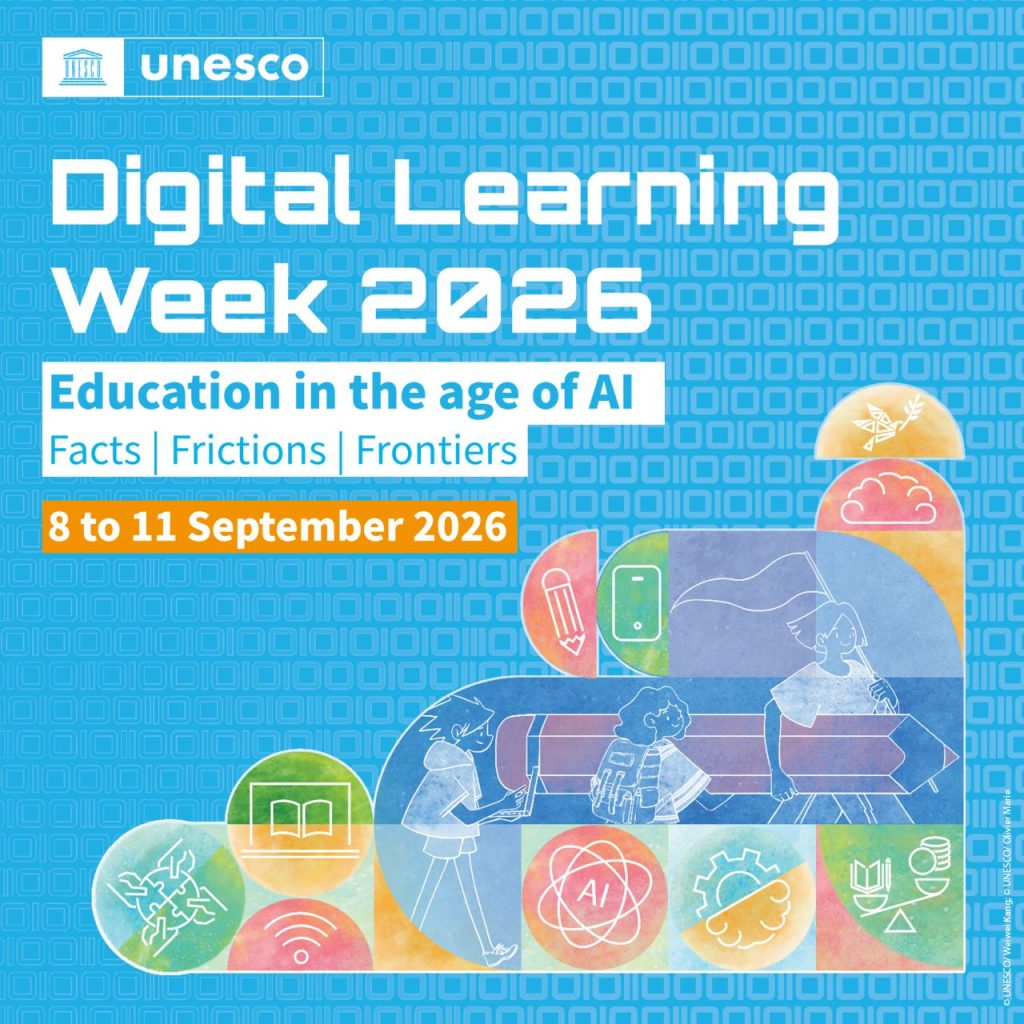
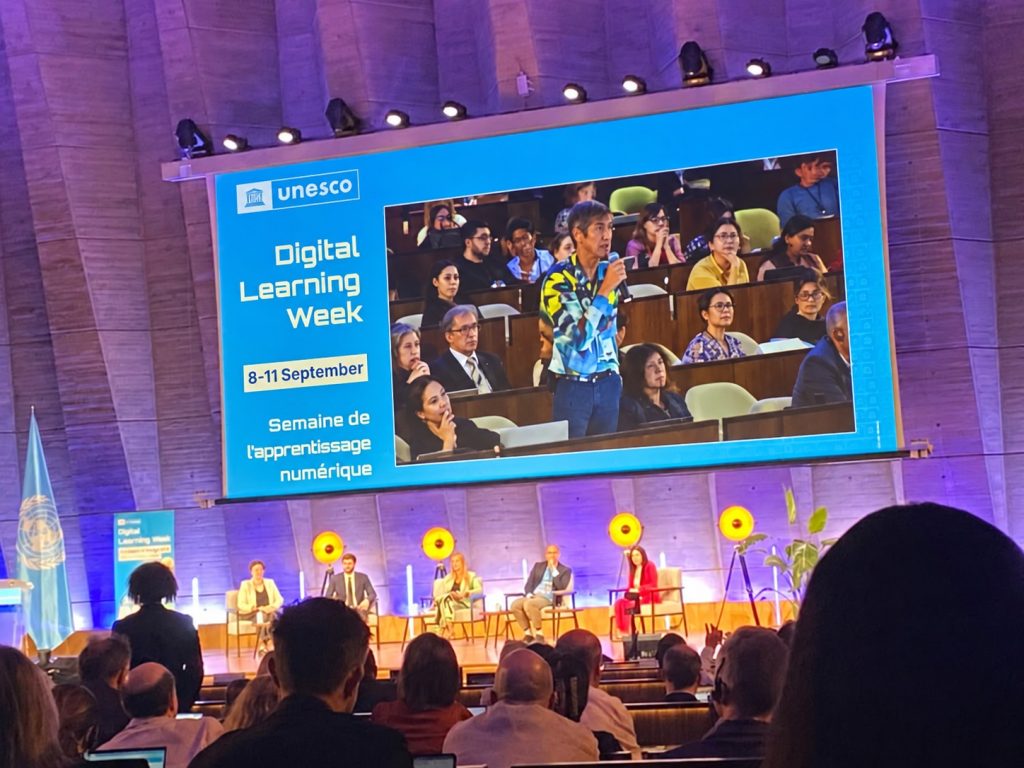
The UNESCO Digital Learning Week 2026 was again an extraordinary event! Exciting talks and discussions among more than 1,300 leading experts on this year’s motto: “Education in the age of AI: Facts | Frictions | Frontiers”!
One full week at the UNESCO Headquarters in Paris was dedicated to reflect whether and how education as common good can benefit from Artificial Intelligence (AI).
In her excellent Thursday keynote, Baroness Beeban Kidron from UK reminded us that we should begin with the children and the rest will follow. There are two simple reasons: our moral duty of care and strategic decision to give children more rights next to the human rights. If we give rules for AI and technology used by children, then we can discover our potential agency and maybe also rules for adults. Consequently, we should not aim for minimal viable AI products but for minimal viable AI regulation.
And the panelists of the following plenay discussion “Towards deliberative governance on learner safety in education” emphasized the need for an ethical AI regulation in their answers on my related question:
They confirmed the urgent need worldwide for regulating education with AI and education about AI.
In their lively Wednesday Fireside chat, Cristine Legare and Jason Lodge (both USA) had already focused metacognition as mandatory prerequisite before. Cristine underlined that learning occurs when interaction (with or without ai) is happening and thus, social learning is very important while AI prefers one style to think about learning. And Jason pointed out that interaction with AI is very different compared with other technologies and that humans learn better with and from other humans.
In the beginning, Sonia Linvingstone asked in her keynote the most important question: What is the right AI age? While the regulationsa are very different, we see more risks than benefits until now and have to define clear educational purposes first. My own question concerned the immense AI costs that are avoiding education support and investment.
This year, we were pleased to engage with all participants of the UNESCO Digital Learning Week 2026 in four interactive workshops on AI in education frictions or non-frictions hold in four languages (English, French, Spanish and Arabic). Organised by our UNESCO UniTwin Network on Open Education (UNOE: https://unitwin-unoe.org/), we could reflect 23 dilemmata in a game-based approach.
Finally, we had the opportunity to present our new research project ASSAI (https://assai-project.eu/) on policy development for AI-mediated assessment in education. All received feedback encourages us to concentrate on the ethical questions for the introduction of AI into formative and summative assessment that has completely to be changed.
Overall, it was extremely valuable to attend this truly international conference this year. A big Thank You goes to the great UNESCO organisers, among others: Keith Holmes, Sobhi Tawil and in particular Shafika Isaacs.
Therefore, I’m looking forward to meeting you at UNESCO Digital Learning Week 2027!
Generative AI (GenAI) is already dominating our news but will it also dominate our future society? This question requires more attention now due to the latest developments during the last months. While the invention and introduction of AI happened already in the last century during the 1950ies, it was in the focus of the broad audience and news. That changed with the publication of ChatGPT by the company OpenAI on 30th of November 2022 that caused a unique interest and shortest period of time of any webservice ever to gain 100 million of users. This led to an AI boom with many competing companies developing and providing AI systems. Their financial investments as well as their development cycles were increasing dramatically so that the progress and capabilities of AI systems were doubling at least every year.
But that changed during the last months in our current year 2026 now. The non-profit research organisation METR is measuring and comparing the latest developments of the so-called frontier AI models that are becoming allrounders and agents for any purpose and task. In the spring 2026, the global AI capacity has not doubled but increased at 10 times a year what makes a huge difference. If this speed continues, then next months will show a dramatic change in the capabilities and impacts of AI models, maybe even leading to the arrival of the artificial general intelligence (AGI) surpassing human capabilities soon. Taking the former evaluations for AI such as the famous Turing test, the AI models have already achieved and exceeded human-level intelligence. And the speed of this progress related AI development, implementation and application is augmenting without any precedents before.
What does it mean for our future society?
The use of GenAI and its integration everywhere are impacting all sectors and the whole society. The highest impact is the financial investment into the environment required for running AI systems such as data centres and specialised chipsets next to the consumptions of energy and water and their power plants. What is spent for all these expenditures is not available anymore for other goals and purposes. While the huge promises of the AI providers are not yet fulfilled, the majority of companies in all sectors as well as governments worldwide are searching for chances to reduce their own costs and often come to the conclusion to reduce working staff and replacing them by AI services. Thus, the workforce and employees in many sectors are under pressure including education in which teaching tasks could be transferred and assigned to AI tutors.
What does it mean for our future education?
It is evident for education experts and practitioners, that AI cannot replace teachers. Nevertheless, huge AI promises such as personalised tutoring are made also for school and higher education without any scientific evidences until now. Therefore, a latest study demands for strict and clear AI regulation in education for the benefits of the learners, namely the vulnerable minors in schools, and of the whole education system. However, many policymakers, teachers, students and their parents are lacking knowledge about GenAI and in particular requiring AI literacy to understand the AI characteristics and to making informed decisions for or against AI use. In addition, the building of digital and AI competences is needed to ethically regulate and use GenAI and to critically analyse its conditions and results.
Three new initiatives for ethical use of AI
Therefore, three initiatives have started now and I’m very happy to be co-founder of all these three:
First, the European research project ASSAI has started to facilitate responsible and ethical use of GenAI in assessment and to improve AI literacy. You can find out more about ASSAI here:
Second, the European research project DC4Democracy has started to facilitate digital competence for democracy building in school education including ethical use of GenAI and to improve the assessment of digital competence and democracy building. You can find out more about DC4Democracy here:
Third, the global initiative Critical Studies on AI and Education (CSAI&ED) was established and is meeting every two months. You are kindly invited to join! More information here:
ASSAI has started to facilitate responsible and ethical use of GenAI in assessment and to improve AI literacy.
The key objective of our new ASSAI project is to analyse the future use of GenAI in assessments and provide guidance.
The first focus of the European research project is the human decision making on GenAI and its ethical use in assessments in education. Two main questions are central for the discussion of the relationships between AI and assessment:
When and how to use AI in assessment?
How does AI impact assessment and in consequence learning?
Overall, ASSAI aims to foster the organisational readiness and capacity of policymakers, leaders and professionals in decision making on, planning and regulating the future use of GenAI in assessment in education with a special focus on Higher Education (HE). Although interactions between individuals and GenAI are receiving extensive attention, ASSAI adds to this by recognizing that education policymakers and institutional leaders need to consider the systemic consequences of AI for education systems and institutions, as it transforms roles, activities, and interactions.
ASSAI focuses on assessment because (a) the EU AI Act classifies the evaluation of learning outcomes as high risk, (b) assessment is a fundamental function of education institutions’ pedagogic mission and their business models, and (c) AI impacts assessment already and is often regarded as a key problem by teachers and policy makers.
ASSAI will provide guidance to all stakeholders to support them in understanding the ethical use of GenAI and thinking through the benefits, constraints, and systemic impacts of AI systems. Consequently, the first ASSAI publication, the ASSAI Ethical Foundations for Inquiry and Practice, will offer carefully selected ethical values and foundations to the policymakers, leaders and educators in HE.
Six months ago, I asked the simple question “3 years of ChatGPT – so what?”. I was reflecting the anniversary of ChatGPT on 30th of November. But it seems that the AI progress and impact has dramatically developed since then.
As you know, I’m a passionate promoter of Open Education as a broad philosophy for learning innovations. And I strongly believe in the power and impact of quality education. Therefore, I’m always reflecting how education and society are affected and challenged by Artificial Intelligence (AI).
Let me share my hopes and concerns with you and tell me your opinion on them:
Today, there is more an AI hype with promises for everything and all sectors while AI regulation is considered as hindering innovation and unique opportunities. But I believe that just the contrary is true: AI regulation is helpful and beneficial because it facilitates the responsible, safe and fair AI use and sets guardrails for all parties and stakeholders.
In the special sector education, we urgently need more AI regulation to safeguard our human rights, democracy, and societal learning objectives and equality! You can read my full argumentation in my new publication here: https://doi.org/10.1007/s43681-026-01092-5
However, governments worldwide are reducing AI regulations to reduce barriers for AI providers and to allow their expansion without strong and clear limits. As a consequence, we are starting experimentations with children without any proven evidence from scientific research that AI use in education is causing positive effects.
This spring, it happened that a leading AI provider (Anthropic) warned for their own new versions of Claude (Mythos 5 and Fable 5) due to their functionalities to find and exploit software bugs. They decided to delay their publication allowing software developers to solve identified vulnerabilities first what was appreciated broadly.
However, the American government has forced Anthropic now to shut down the access to Mythos 5 and Fable 5 without any precise reasoning. That is increasing the bad situation that single institutions decide what is happening with the AI deployment worldwide: First, the commercial AI providers and their single leaders were deciding and now, nations and their single leaders are following them.
That is challenging human rights and democracy in general what the Council of Europe also highlights in the new Handbook on AI and Human Rights (for which I was honoured to deliver the draft for the Section 4.7 “Education” together with Wayne Holmes). Not commercial interests of a few but our societal needs and benefits for the commons and all should guide our decision making on AI and education.
AI can and do harm everybody and in particular minorities and vulnerable groups. Children are especially exposed because they cannot understand the mechanisms and often do not critically reflect the AI results (and also most adults do not critically reflect AI outputs). The leak of Claude’s system prompts (more than 1000 lines of code regulating the AI results) and the daily changes of Grok (to deliver more or less faschistoid or sexistic outputs) caused by Elon Musk demonstrate that the AI providers are strongly influencing what AI systems are delivering as their results.
Thats means, only a few people (almost only white men) are deciding how AI systems are answering human questions as well as requests by other AI systems. Therefore, if we want to use AI in education, we need public AI systems and infrastructure independent from commercial interests. In addition, we need education about AI for teachers, for students and for the whole population to facilitate critical reflections and building of AI competences and AI literacy. But both requires a lot of time and huge ressources.
Therefore, we should broadly discuss and implement regulation of current AI use in education that is only experimentation in most cases at the moment. We need to reflect why we are using AI, what are our learning objectives for education with AI and whether we need to use AI in a specific situation at all. For the scientific research and analysis, we have established the Critical Studies on AI and Education (CSAI-ED) last Friday and you are most welcome to join!
And for the broad and global discussions, we need to join forces: A movement worldwide is required NOW to launch critical debates among all stakeholders and to achieve changes and regulations of our currently unregulated experimentations. AI should not serve commercial interests and manipulations but positively contribute to our society and our common good. If you want to support me, drop me a line and have a look on: https://act-NOW.eu
Again, I’m very curious about your personal opinions and changes:
What do you think about it and what happened to you during the last six months?
Thank you for sharing your thoughts and let us keep in contact!
I’m looking forward to a better future through Open Quality Education including AI use in innovative learning processes for All and to our close collaboration for realising it!
Come to our Practitioners, Industry and Policy (PIP) track!
It is taking place at the 27th International AIED Conference on:
Wednesday, 1st of July 2026 at COEX in Seoul, Korea
The Practitioners, Industry and Policy (PIP) Track was established at AIED 2025 and continues at AIED 2026 thanks to its great interest and success last year.
The PIP Track is unique as it is not asking for scientific papers, but contributions on the role of AI in industry and society, in relation to educational challenges and opportunities. Practitioners and policy makers are invited to share AI in Education (AIED) examples and initiatives from industry, schools, higher education, workplaces, and society at-large.
The PIP Track is an opportunity for researchers to learn from practitioners and policy makers, and allowing practice and policy to be enriched, in turn, by rigorous evidence-based research. It seeks submissions that present implementations from education or industry as well as strategies and policies on AIED. Explicitly, the PIP Track welcomes descriptions and reflections of practical implementations, strategies, and policies, and analyses of personal experiences using AI in the educational domain from a practical perspective.
This year, the PIP Track received again a record of 40 submissions from which 10 high quality contributions were selected after strict peer-reviews (acceptance rate of 25%). Therefore, it will offer contributions from a range of different educational contexts and professions to reflect the manifold implementations and perspectives in AIED.
Our fourth workshop at the International AIED Conference will focus the need for international regulation of AI and Education (AI&ED) to foster human rights, democracy and equity.
Ethical Artificial Intelligence and Education (AI&ED): The need for international regulation to foster human rights, democracy and equity
It will take place at 27th International AIED Conference on:
Saturday, 27th of June 2026 at COEX in Seoul, Korea
AI&ED means the necessary combination of Education with AI (short: AIED = using AI in education), and Education about AI (short: AI Literacy = learning and building competences about AI).
The half-day workshop (13:00 to 18:00) will be run in an interactive, hybrid format, encouraging active participation throughout. It is divided into two parts, each building on the other.
The first part focuses on small group work or plenary discussion (depending on the number of participants), where participants will collaborate on three key questions:
Which regulations of AI and Education (AI&ED) do you know?
Which guidelines for AI and Education (AI&ED) have you to follow?
Which AI&ED regulations and guidelines are you missing and would like to be developed?
In the second part, the workshop will use the World Café approach, where participants will work in small working groups on three questions and answer them in group discussions. The discussions will be documented, synthesised, and structured into categories that reflect actionable regulatory needs. The three key questions are:
Ethics: What should the ethics of AI and Education cover?
Regulation: Which regulation pillars are needed for the AI use in education to safeguard and foster human rights, democracy and equity?
Assessment: Which specific ethical regulations, principles and considerations should be implemented for AI use in formative and summative assessment in education?
We are looking forward to meeting and discussing with you!
I’m very happy and proud that my new journal article is published today! Hot off the press:
“Why we need ethical regulation of Artificial Intelligence and Education (AI&ED) and how we benefit from it.”
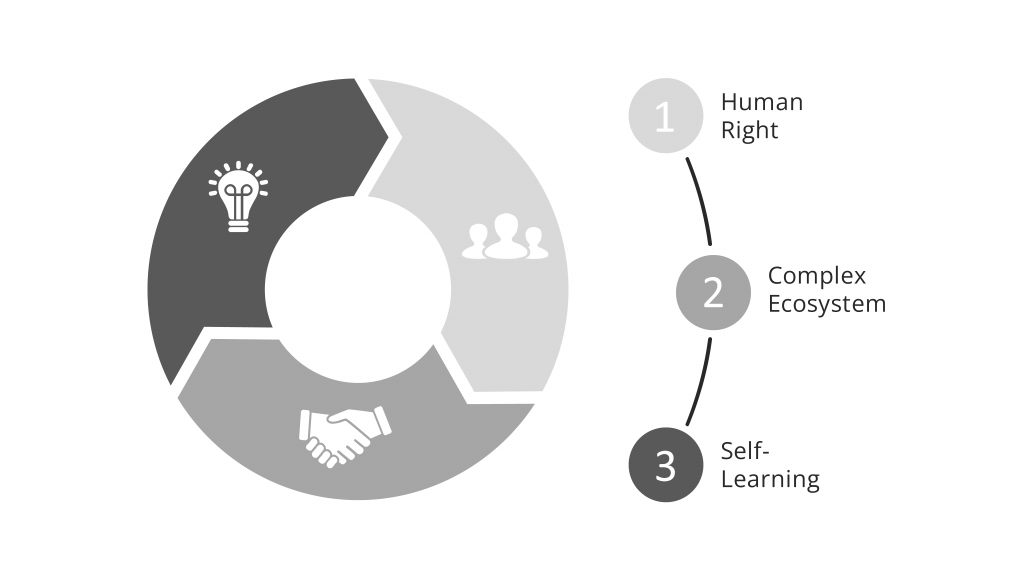
My new journal article discusses education as a special sector and provides three key arguments:
First, quality education is a human right for all.
Second, education is a complex ecosystem.
Third, education cannot be forced and is always self-learning by the students.
It is urgent to launch global discussions and to develop AI regulation worldwide for safeguarding our public quality education and society.
All my reviews and arguments highlight that we lack evidence of positive as well as of negative effects and that we have to define clear policies and rules what we want to allow and what not.
My key concern at the moment is the lack of independent public infrastructure for quality education leading to experiments with pupils as vulnerable minors using commercial AI platforms and services without any control.
Enjoy reading my article in the journal “AI and Ethics”:
Generative Artificial Intelligence (GenAI) fundamentally transforms many areas of life and society. It also has particular impacts on education, as it challenges roles, activities, and interactions in teaching and learning.
To address these challenges, the new EU project “AI-Driven Assessment in Education: Shaping Policies for Responsible and Ethical Implementation” (ASSAI) started now, co-funded by the European Union.
The key research question of ASSAI is:
How can we enable policymakers, leaders and professionals to innovate and improve formative and summative assessment in higher education with the effective, inclusive, human-centred and ethical use of Generative Artificial Intelligence (GenAI)?
ASSAI provides guidance to policymakers, leaders and professionals in higher education to support them in considering the benefits and constraints of Artificial Intelligence (AI) and its ethical and systemic effects for education systems and individual institutions.
In particular, the role of assessment in education is given attention, as the use of AI for the evaluation of learning outcomes can have pronounced impact on traditions of higher education systems and practices. In the European AI Act, it has accordingly been classified as high risk, given that assessment is often considered as the fulcrum by education systems and institutions to measure success of their pedagogical mission, learning outcomes and operational models.
Ultimately, ASSAI thus enables policymakers, leaders and professionals in higher education to improve their organisational readiness and expertise building for planning and regulating the use of Generative Artificial Intelligence (GenAI).
CLE will become my new home for exciting collaboration and activities on Ethical AI and Education (AI&ED) and the relations to societal impacts and benefits:
I’m looking forward to sharing more details and cooperating with you on the life ethics for the benefits of our whole society!