A Milestone: The UNESCO OER Recommendation is adopted!

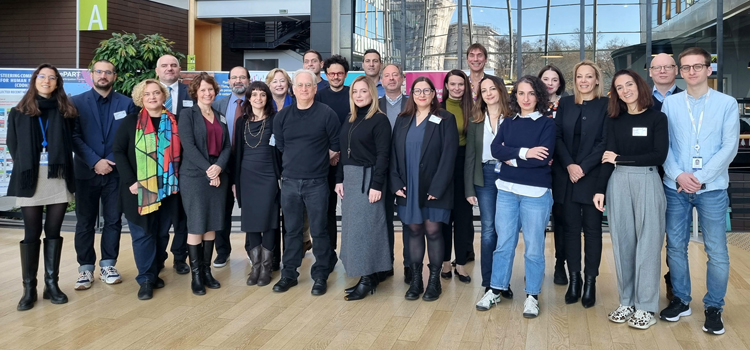
On 25th of November 2019, the 40th General Conference of UNESCO has adopted the UNESCO OER Recommendation after four years of hard work!

That is a huge and unique milestone for Open Learning and Education that cannot be overestimated in its potential impact! All educators, learning designers, policy makers, public authorities and ministries worldwide are called for action.

It is the first UNESCO Recommendation in the fields of Open Education adopted by consensus. All 193 countries that are member states of UNESCO have the request, task and responsibility to ensure the implementation of the UNESCO OER Recommendation in their educational systems and to provide annual reports about the progress.

I strongly hope and believe that it will be a change agent to open up and improve our future learning and education and to achieve the sustainable Development Goal no.4: inclusive and equitable quality education for all.

The OER definition of the UNESCO OER Recommendation says:

“Open Educational Resources (OER) are learning, teaching and research materials in any format and medium that reside in the public domain or are under copyright that have been released under an open license, that permit no-cost access, re-use, re-purpose, adaptation and redistribution by others.”

And open license is defined as:

“Open license refers to a license that respects the intellectual property rights of the copyright owner and provides permissions granting the public the rights to access, re-use, re-purpose, adapt and redistribute educational materials.”

There are some concerns about these definitions and indeed, the definitions are not easy to read. But they were developed in a truly global and transparent process and have not been changed by UNESCO. And the definitions are not causing problems if they are used and interpreted in a normal way (abuse due to bad intentions or special legal systems cannot be avoided with any definition).

I’m preparing a comprehensive documentation of the history, adoption and ongoing implementation of the UNESCO OER Recommendation HERE.

It will be updated regularly.

To answer the concerns mentioned above, here is the overview of the history and development of the UNESCO OER Recommendation:

2017:

The Second World OER Congress organized by UNESCO took place in Ljubljana on 18th to 20th of September 2017.

2018:

UNESCO published the OER Recommendations in a first version for public consultation (see my submitted comments here on this Open Call for Contributions to collect comments on the OER Recommendations).

2019:

The first draft of the UNESCO OER Recommendation (CL/4273) was published in April 2019 

The final draft of the UNESCO OER Recommendation (CL/4291) was developed in May 2019 and is dated September 2019 : It is the result from the “Intergovernmental Meeting for the Draft Recommendation” that took place in Paris in May 2019. All member states and key NGOS have been invited to attend with official delegations and 150 delegates from 100 countries participated. 

The final UNESCO OER Recommendation (40 C/32) were adopted at the 40th UNESCO General Conference in Paris on 25th of November 2019.

My comments for UNESCO Call on OER Recommendations

As already mentioned in my earlier post, UNESCO has published the OER Recommendations in a first public version.

Attached my comments on the Open Call for Contributions to collect comments on the OER Recommendations by UNESCO that I have submitted today.

In principle, the OER Recommendations are balanced and formulated very well. They are presenting a vision on how OER can improve future education and learning.

What I’m missing are two key points:

First, the focus could be increased by addressing not only OER (as a means and instrument) but Open Education (as a multi-dimensional methodology) in general. As I understood that it is a political question, I have not mentioned it in my submitted somments but I hope that it can be added later.

Second, the importance of quality of OER and Open Education is not highlighted. Therefore I propose to add a sixth objective: “Quality assurance for OER: support and encourage the monitoring, evaluation and improvement of OERs. I hope that it will be included in the final version to underline and strengthen the need and demand for the (appropriate) quality of OERs.

UNESCO’s long-term aim is the approval of the OER Recommendations as official international UN recommendations by the United Nations in the global plenary 2019. That would be a milestone for our global OER movement and Open Education in general!

The OER Recommendations are following up the Second World OER Congress organized by UNESCO in Ljubljana on 18th to 20th of September 2017. And they are based on the Ljubljana OER Action Plan 2017 that were approved during the Second World OER Congress.


UNESCO OER Recommendations Call

UNESCO OER Recommendations Call

UNESCO has published the OER Recommendations in a first public version.

The long-term aim is the approval as official international UN recommendations by the United Nations in the global plenary 2019. That would be a milestone for our global OER movement and Open Education in general!

The OER Recommendations are following up the Second World OER Congress organized by UNESCO in Ljubljana on 18th to 20th of September 2017. And they are based on the Ljubljana OER Action Plan 2017 that were approved during the Second World OER Congress.

And UNESCO has lauched a Call for Contributions to collect comments on the OER Recommendations. The OER Recommendations are available in English and in French.

Deadline for submissions is on Friday, 1st of June 2018.

Appointment as ICDE Chair in OER

Appointment as ICDE Chair in OER

The International Council for Open and Distance Education (ICDE) has appointed me as ICDE Chair in Open Educational Resources (OER). This appointment from such a leading international association is a great honour which I am delighted to accept in recognition of my activities and achievements for Open Education. For the past 2 years, I have been working as Associate Professor for Open Education in the Open University’s Welten Institute.

Throughout my career, I have started many successful international projects to open up education and to facilitate and improve the application and impact of Open Education. The main focus of my work is on the quality of Open Education. I set-up and coordinate MOOQ, a European Alliance for the Quality of MOOCs (Massive Open Online Courses) which aims to foster and improve the quality in Open Learning and Education particularly in MOOCs

Read more
Siberia is melting for Open Education

Siberia is melting for Open Education

I was very honoured to hold the keynote at the International Lensky Education Forum in Yakutsk: It was my first trip to Siberia and I was very curious what I could discover. I explored an unknown world with extremes (+40 degrees in summer and -45 degrees in winter) and extraordinary passion for Open Education that I had not expected.

Overall it was a unique experience in the Republic of Sakha (formerly called Yakutia) that I do not want to miss! I was impressed by the very kind hospitality and strong focus on educational innovations that were presented during the four-day congress. And in meetings with the government as well in many personal talks with the Minister of Education Prof. Dr. Feodosia Gabysheva (left on the photo) I could feel their dedication for opening-up education in Siberia. Together with Dr. David Atchoarena, UNESCO Director for Policies and Lifelong Learning Systems (middle), we enjoyed an exciting event including 100 booths on the main Lenin Square of Yakutsk and a concluding boat trip to the UNESCO world heritage Lena pillars (photo taken on their top). And I have learned that the congress with more 3,000 participants in more than 200 events is just the starting point for a long-term and sustainable support to Open Schools and Education.

Here you can find the full description how Siberia is melting for Open Education.

And here is my keynote presentation at slideshare with open licence.

MOOQ survey on Quality of MOOCs launched

The MOOQ survey on quality of MOOCs launched today

Join our survey, it takes only 10 minutes:
http://goo.gl/forms/dsjqwDl6jZ5iOmZx2

Please share your experiences and expectations with us and all interested MOOC learners and designers!

Let us improve future MOOCs for better learning for all!

Thank you very much for your feedback!


The MOOQ survey on the quality of MOOCs will be launched and presented at EDEN Conference 2016 in Budapest:

You are kindly invited to share the following links and invite your colleagues and friends:

http://mooc-quality.eu/mooq-survey-on-quality-of-moocs-launched

https://www.linkedin.com/pulse/mooq-survey-quality-moocs-launched-eden16-christian-m-stracke

MOOQ and MOOCs at EDEN Conference

MOOQ and MOOCs at EDEN Conference

eden conference 2016

MOOCs are dead!

Long live MOOCs!

One provocative paper presentation at the European EDEN Conference 2016 among many other activities on MOOCs.

This year, EDEN 2016 has a strong focus on MOOCs and I’m very pleased to heavily contribute and support the debate together with my colleagues:

The presentation of my paper “MOOCs are dead!” will take place in the session D3 on Thursday, 16th of June (from 11:30 to 13:00), you are most welcome to join the discussion!

In addition I will introduce MOOQ, our ambitious European initiative for comparing and improving the quality of MOOCs: The MOOQ presentation will take place on in the synergy session B5 on Wednesday, 15th of June (from 14:20 to 15:50).

Another speech will demonstrate the interim results of EBE-EUSMOSI, the initiative for evidence-based school education, and in particular the new assessment instrument on inclusion: It will take place in the synergy session F4 on Friday, 17th of June (from 09:00 to 10:30).

And I will also introduce the new European research consortium PBL 3.0 for combining learning analytics and semantics in problem-based learning in the same session F4 on Friday, 17th of June (from 09:00 to 10:30).

Finally my colleagues Francis and Olga are organizing the EMMA workshop as a bootcamp on MOOC Assessment for Learning in Practice: You are most welcome to join the session B6 on Wednesday, 15th of June (from 14:20 to 15:50).

MOOQ and MOOCs at EDEN Conference 2016 in Budapest: We are looking forward to meeting all colleagues, experts and practitioners and continuing our cooperation!

Keynote on Open Learning at International IEEE EDUCON in Abu Dhabi

Keynote on Open Learning at International IEEE EDUCON in Abu Dhabi

I’m pleased to be invited and deliver the keynote on Open Learning at the International IEEE EDUCON Conference 2016: I will speak about “Open Learning for Smart Education: Open educational policies, strategies and access for all”. This year EDUCON is taking place from 10th to 13th of April 2016 in Abu Dhabi.

My questions of the keynote on open learning will be: What is Open Education? Why do we need to change education? How can we collaborate and share our methodologies and resources for mutual benefits?

Read more
MOOQ: Successful Kick-Off at OUNL

MOOQ: Successful Kick-Off at OUNL

MOOQ is the European Alliance for Quality of Massive Open Online Courses, called MOOCs.

Yesterday and today, I was pleased as MOOQ coordinator to welcome all partners at the OUNL in Heerlen.

The MOOQ kick-off meeting was extremely successful:

We could define the vision, the mission and first MOOQ activities.

The vision of MOOQ is to foster quality in MOOCs leading to a new era of learning experiences.

MOOQ’s mission is to develop a quality reference framework for the adoption, the design, the delivery and the evaluation of MOOCs in order to empower MOOC providers for the benefit of the learners.

To improve the quality of MOOCs and to enhance the unique digital market in Europe, MOOQ will lead to new Q-generation of MOOCs that will be designed, organized and tested as qMOOCs. This will be done in close collaboration with all interested partners and stakeholders in Europe and beyond.

A first MOOQ website is already published.

MOOQ promises: We will make MOOCs better!

MOOQ is starting to improve the Quality of MOOCs!

MOOQ is a new European initiative supported by the European Commission:

Today, MOOQ is starting to improve the quality of MOOCs.

MOOQ is the European Alliance for Quality of Massive Open Online Courses (called MOOCs).

As the coordinator, I’m happy that the Welten Institute is cooperating with the Hellenic Open University, the National Quality Infrastructure System of Greece, the Portuguese Open University of Lisbon, and the French Ecole Normale Supérieure de Lyon. Together we will improve MOOCs and develop a quality reference framework for their design and comparison.

We are looking forward to collaborate with all interested stakeholders and expert!